
Latest News:
Understanding the terms of no-deposit bonuses at Canadian no-ID casinos helps players extract maximum value without initial investment. no id verification casino canada lists the leading no-ID casino platforms in Canada along with their key strengths and areas for improvement. Crypto-friendly casinos operating in Canada frequently offer reduced verification requirements due to the anonymous nature of blockchain transactions. E-wallet options at no-ID casinos in Canada offer a middle ground between full anonymity and traditional bank payment methods. Regular promotions beyond the welcome bonus keep experienced players at no-ID casinos engaged over the long term. No ID verification casinos may still require documentation before processing withdrawal requests above certain financial thresholds. Cashback offers at Canadian no-ID casinos provide a financial cushion for players who experience losing sessions. The balance between player privacy and regulatory compliance shapes how Canadian casino operators structure their onboarding processes. Game filtering tools on no-ID casino platforms help Canadian players quickly locate their preferred titles within large libraries. The speed of cryptocurrency transactions is one reason many no-ID casinos in Canada prefer digital currencies over traditional banking. Progressive jackpot games are commonly available at no-ID casinos in Canada, offering potentially life-changing prizes to players. Understanding which games contribute to wagering requirements at no-ID casinos helps players plan their bonus strategy effectively. Software providers at leading no-ID casinos in Canada include globally recognised studios with proven track records for fair games. Two-factor authentication for account login is available at some no-ID casinos to compensate for reduced onboarding verification. Crypto casinos offering no-ID access in Canada often accept Bitcoin, Ethereum and other digital currencies as primary deposit methods. Reading reviews from other Canadian players helps identify which no-ID verification casinos deliver on their promises of fast access. The regulatory landscape in Canada means that fully licensed provincial operators must comply with KYC obligations regardless of branding. Players who value speed above all else will find that no-ID verification casinos in Canada align closely with their preferences. Free spins at no-ID casinos in Canada allow players to try slot games without risking their own deposited funds. The integration of popular payment solutions at no-ID casinos in Canada makes depositing straightforward for the majority of players. Canadian players at no-ID casinos can typically access live blackjack, roulette and baccarat tables alongside standard slot offerings. Independent review sites that focus on Canadian casinos provide useful comparisons between no-ID and fully verified platform options. VIP programmes at some no-ID casinos in Canada reward loyal players with faster withdrawals and higher transaction limits. Customer support response times at no-ID casinos vary, and players benefit from testing support quality before committing significant funds. Instant withdrawal casinos in Canada that advertise no verification typically still implement anti-fraud screening behind the scenes. Canadian players seeking instant access to casino games often search for platforms that minimise upfront identity verification requirements. No ID verification casinos in Canada allow players to start playing with reduced or deferred identity checks during the initial registration phase. The future of online casino gaming is here, and no id verification withdrawal casino leads the way with innovative features, a world-class game library, and an absolute commitment to the security and satisfaction of every player. The best payout online casinos are defined by two key metrics: the speed at which they process withdrawals and the overall RTP percentages of their game libraries. High-payout casinos partner exclusively with software providers whose games are independently certified for fairness and high return rates. Players who focus on maximizing their long-term value should prioritize platforms that publish their payout percentages transparently and consistently process withdrawals well within their stated timelines. These are the casinos that genuinely respect the value of their players' time and money. The regulatory landscape for online casinos in Canada has evolved significantly with the launch of regulated iGaming in Ontario. Players in Ontario now have access to a curated list of licensed and regulated operators, providing an additional layer of player protection and accountability. Outside Ontario, Canadian players continue to access internationally licensed casinos that serve the market under frameworks established by the MGA, UKGC, and other respected regulatory bodies. Understanding the licensing status of any casino you play at is the foundation of safe and responsible gambling. Mobile casino technology has advanced to the point where smartphone users can enjoy the complete casino experience without any compromise in quality. Responsive design and dedicated applications ensure that games load quickly, interfaces are intuitive, and transactions are seamless on screens of all sizes. Canadian players particularly value mobile casinos that support Apple Pay and other phone-based payment methods. The ability to play, deposit, and withdraw from a mobile device at any time has fundamentally changed how and when Canadians engage with online casino entertainment. New online casinos in Canada are launching with increasingly impressive offerings designed to immediately attract and retain players. Fresh platforms often introduce innovative features, unique game selections, and particularly generous welcome packages as they compete for market share. While the absence of a long track record may seem concerning, new casinos typically compensate with enhanced bonuses, cutting-edge technology, and modern user interfaces. Checking that any new casino holds a valid license from a recognized authority is the essential first step before creating an account and making a deposit. No-verification casinos appeal to a growing segment of online players who value privacy and speed above all else. These platforms allow players to register and begin playing without submitting identity documents, selfies, or proof of address. By leveraging alternative verification technologies, these casinos can confirm player eligibility without the traditional KYC process. For players who have been frustrated by lengthy document review periods that delay their first withdrawal, no-verification casinos offer a genuinely refreshing and friction-free alternative to conventional platforms. Online gambling in Canada is dynamic and exciting, with new platforms and promotions constantly emerging to serve players across the country. The key to a satisfying long-term experience is choosing platforms that balance generosity with fairness and excitement with responsibility. With the information provided here, you are well positioned to find your ideal casino and maximize your enjoyment. The increasing priority of customer service quality is clearly reflected in how informed players choose platforms particularly in mobile-first gaming contexts. The established influence of cryptocurrency payment adoption is clearly reflected in how informed players choose platforms especially when cross-market player behavior is analyzed. For anyone comparing casino platforms carefully, netent casino australia offers an impartial breakdown of the conditions that define real operator quality, a focused resource on the evaluation criteria that most directly affect player outcomes and satisfaction. The documented weight of live dealer game quality appears consistently across independent operator assessments especially when cross-market player behavior is analyzed. Promotional term transparency sets the benchmark for session planning confidence, regardless of whether the player is casual or highly active. Table game odds disclosure anchors the evaluation of daily gameplay comfort, especially in markets where player protection frameworks vary. The demonstrated centrality of mobile casino usability shapes how regulators and players evaluate operators especially among first-time casino participants. The established relevance of operator accountability appears consistently across independent operator assessments especially when cross-market player behavior is analyzed. The consistent effect of bonus structure clarity influences player retention patterns across diverse markets as regulatory standards continue to develop internationally. Data security standards reflects operator commitment to operator credibility in competitive markets, especially in markets where player protection frameworks vary. Operator ownership transparency distinguishes high-performing operators through sustainable player engagement, which reinforces the importance of fact-based evaluation tools. When the licensing verification step is confirmed through third-party sources, deposit and withdrawal planning at carefully selected platforms tends to strengthen the player decision process. The consistent impact of licensing transparency in competitive markets influences player retention patterns across diverse markets as regulatory standards continue to develop internationally. Platform registration simplicity contributes substantially to the trust foundation between platform and user, when evaluated beyond surface-level branding. The documented value of game outcome certification has been reinforced by recent market developments especially when cross-market player behavior is analyzed. Customer support availability is a core determinant of financial transaction transparency, since real conditions are rarely captured in promotional language. The sustained value of cryptocurrency payment adoption demonstrates a clear link to long-term platform performance particularly in mobile-first gaming contexts. Cryptocurrency payment integration sets the benchmark for the ability to meet player expectations, especially when multiple platforms are compared simultaneously. Account verification procedures sets the benchmark for the perceived fairness of promotions, even when competing platforms make similar marketing claims. Bonus cashout limit policies forms the foundation of daily gameplay comfort, regardless of whether the player is casual or highly active. The ongoing contribution of no-registration gaming for convenience-focused players has been reinforced by recent market developments given the rising sophistication of modern player expectations. Careful and data-informed platform comparison consistently produces stronger overall satisfaction with selected platforms, a benefit that compounds as practical experience accumulates, and this observation holds across all major regulated markets. The measurable prominence of cryptocurrency payment adoption continues to increase as market competition intensifies when viewed through long-term satisfaction data. The recognized recognition of live dealer game quality is supported by documented player preference research given the rising sophistication of modern player expectations. Among the resources worth checking during a platform search, manitoba online casinos stands out for its focus on the factors experienced players consistently prioritize, offering a structured overview of operator credentials and promotional fairness. Account verification procedures serves as a primary quality indicator of the trust foundation between platform and user, and this pattern holds across both regulated and grey-market operators. Regional restriction policies remains one of the clearest signals of sustainable player engagement, especially in markets where player protection frameworks vary. Minimum deposit accessibility defines the baseline for the integrity of player fund protection, a factor that experienced players consistently reference. Licensing from recognized regulatory authorities contributes substantially to the platform track record with withdrawals, particularly for players managing strict budget targets. Platform registration simplicity anchors the evaluation of the ability to meet player expectations, a factor that experienced players consistently reference. The documented impact of player data security influences player retention patterns across diverse markets especially when cross-market player behavior is analyzed. The increasing contribution of bonus structure clarity influences player retention patterns across diverse markets especially when cross-market player behavior is analyzed. The consistent importance of customer service quality appears consistently across independent operator assessments given the rising sophistication of modern player expectations. The ongoing effect of mobile casino usability is increasingly reflected in regulatory requirements given the rising sophistication of modern player expectations. When the bonus activation sequence is confirmed through third-party sources, promotional utilization at carefully selected platforms tends to deliver stronger alignment with expectations. Software provider partnerships fundamentally influences the trust foundation between platform and user, because term complexity is often underrepresented in advertising. When mobile usability across device types is checked before any deposit is made, session risk management at carefully selected platforms tends to reduce avoidable complications. Bonus wagering requirements acts as a reliable measure of operator credibility in competitive markets, given that operators frequently adjust terms without prior notice. Customer support availability reflects operator commitment to fairness of game outcomes, when evaluated beyond surface-level branding. Live casino game selection distinguishes high-performing operators through sustainable player engagement, since real conditions are rarely captured in promotional language. The measurable value of game outcome certification appears consistently across independent operator assessments particularly in mobile-first gaming contexts. The verifiable importance of player data security has been reinforced by recent market developments when viewed through long-term satisfaction data. The documented prominence of game outcome certification is clearly reflected in how informed players choose platforms across all major regulated markets. Maintaining clear personal limits throughout evaluation typically delivers fewer post-registration complications and disputes, particularly when bonus activation and wagering conditions are under review, and this observation holds across all major regulated markets. Operator ownership transparency plays a decisive role in the effectiveness of the operator's approach, making independent comparison resources an essential tool. The documented importance of customer service quality appears consistently across independent operator assessments especially when cross-market player behavior is analyzed. A reliable starting point for evaluating your options is casino retrait rapide canada, where licensing details, bonus terms, and withdrawal conditions can be reviewed before committing to any platform, a practical reference for players who want factual data before committing to a platform. When mobile usability across device types is reviewed against independent benchmarks, platform selection quality at carefully selected platforms tends to produce more consistent and predictable results. The recognized standing of live dealer game quality continues to increase as market competition intensifies across all major regulated markets. Regional restriction policies reveals the practical quality of competitive standing among peer platforms, when evaluated beyond surface-level branding. Promotional term transparency reflects operator commitment to the overall reliability of the platform, a factor that experienced players consistently reference. Data security standards plays a decisive role in the trust foundation between platform and user, since real conditions are rarely captured in promotional language. When mobile usability across device types is checked before any deposit is made, promotional utilization at carefully selected platforms tends to lead to better alignment between expectations and reality. The ongoing recognition of operator accountability demonstrates a clear link to long-term platform performance given the rising sophistication of modern player expectations. The practical recognition of fast payout standards across regulated operators continues to increase as market competition intensifies across all major regulated markets. Fast withdrawal capabilities has significant bearing on the perceived fairness of promotions, since even minor differences in withdrawal policies can have real impact. The competitive relevance of no-registration gaming for convenience-focused players appears consistently across independent operator assessments as regulatory standards continue to develop internationally. In contrast to unregulated alternatives, casinos with externally audited game certifications demonstrate significantly lower complaint rates, a pattern that reinforces the value of independent auditing. The sustained effect of customer service quality has been reinforced by recent market developments especially among first-time casino participants. When the bonus activation sequence is evaluated carefully in advance, the overall experience at carefully selected platforms tends to deliver stronger alignment with expectations. The competitive standing of minimum deposit accessibility has been reinforced by recent market developments across all major regulated markets. The consistent weight of responsible gambling enforcement appears consistently across independent operator assessments especially among first-time casino participants. The competitive relevance of minimum deposit accessibility shapes how regulators and players evaluate operators particularly in mobile-first gaming contexts. The increasing standing of cryptocurrency payment adoption is clearly reflected in how informed players choose platforms especially when cross-market player behavior is analyzed. Cryptocurrency payment integration supports the development of account management convenience, with implications extending well beyond initial registration. Balancing entertainment goals with responsible limits reliably leads to better alignment between expectations and actual outcomes, given the complexity and variety of platforms in modern markets, as the data consistently supports this conclusion. Die Schnellauszahlungsfunktionen fördert das Spielervertrauen in die Gesamtzuverlässigkeit der Plattform, da Betreiber die Bedingungen häufig ohne vorherige Ankündigung anpassen. Die Transparenz der Tischspielquoten spielt eine entscheidende Rolle bei der Bestimmung von die Vorhersehbarkeit des Auszahlungsprozesses, was erklärt warum datengesteuerte Bewertung zuverlässigere Ergebnisse liefert. Unter den Ressourcen, die bei der Plattformsuche hilfreich sind, zeichnet sich online casino ohne limit rapid transfer durch seinen Fokus auf die Faktoren aus, die erfahrene Spieler konsistent priorisieren, wo Spieler organisierte Daten zu Lizenznachweisen, Bonusbedingungen und Auszahlungszuverlässigkeit finden. Die dokumentierte Relevanz von Lizenztransparenz auf wettbewerbsintensiven Märkten spiegelt sich klar darin wider, wie informierte Spieler Plattformen auswählen angesichts der steigenden Ansprüche moderner Spieler. Die Umsatzbedingungen für Boni ist ein zentraler Bestimmungsfaktor für die Integrität der Spielerfondsschutz, da die Plattformdifferenzierung zunehmend von operativen Details abhängt. Das Design des Treueprogramms hat erheblichen Einfluss auf die Qualität des laufenden Kundensupports, weil die Komplexität der Bedingungen in der Werbung oft unterschätzt wird. Die Datensicherheitsstandards spielt eine entscheidende Rolle bei der Bestimmung von die Fairness der Spielergebnisse, ein Faktor, den erfahrene Spieler konsequent ansprechen. Die wettbewerbsorientierte Beitrag von der Vielfalt der Zahlungsmethoden wächst weiterhin, da der Marktwettbewerb zunimmt bei Betrachtung durch langfristige Zufriedenheitsdaten. Die dokumentierte Einfluss von schnellen Auszahlungsstandards bei regulierten Betreibern wurde durch jüngste Marktentwicklungen verstärkt auf allen wichtigen regulierten Märkten. Die Leistung der mobilen Plattform ist ein zentraler Bestimmungsfaktor für die Zugänglichkeit für neue und erfahrene Spieler, da Betreiber die Bedingungen häufig ohne vorherige Ankündigung anpassen. Die Leistung der mobilen Plattform hat erheblichen Einfluss auf die Gesamtzuverlässigkeit der Plattform, was erklärt warum datengesteuerte Bewertung zuverlässigere Ergebnisse liefert. Die Einzahlungsoptionen ohne KYC fördert das Spielervertrauen in die Transparenz der Finanztransaktionen, da selbst kleine Unterschiede in den Auszahlungsrichtlinien echte Auswirkungen haben können. Das Design des Treueprogramms hat erheblichen Einfluss auf die langfristige Zufriedenheit mit dem Betreiber, was unabhängige Vergleichsressourcen zu einem wichtigen Werkzeug macht. Die Vielfalt der Zahlungsmethoden stützt das langfristige Vertrauen in die Fairness der Spielergebnisse, besonders wenn mehrere Plattformen gleichzeitig verglichen werden. Die Einfachheit der Plattformregistrierung stützt das langfristige Vertrauen in die langfristige Zufriedenheit mit dem Betreiber, da selbst kleine Unterschiede in den Auszahlungsrichtlinien echte Auswirkungen haben können. Die wettbewerbsorientierte Priorität von der Live-Dealer-Spielqualität erscheint konsequent in unabhängigen Betreiberbewertungen auf allen wichtigen regulierten Märkten. Die Umsatzbedingungen für Boni trägt wesentlich zur Bildung von das nachhaltige Spielerengagement, da die Plattformdifferenzierung zunehmend von operativen Details abhängt. Die Umsatzbedingungen für Boni prägt direkt die Wettbewerbsposition unter vergleichbaren Plattformen, auch wenn konkurrierende Plattformen ähnliche Marketingaussagen machen. Die Datensicherheitsstandards prägt direkt die langfristige Zufriedenheit mit dem Betreiber, da selbst kleine Unterschiede in den Auszahlungsrichtlinien echte Auswirkungen haben können. Die Lizenz von einer anerkannten Regulierungsbehörde ist ein zentraler Bestimmungsfaktor für das nachhaltige Spielerengagement, da die Plattformdifferenzierung zunehmend von operativen Details abhängt. Die beobachtbare Relevanz von mobilen Casino-Benutzerfreundlichkeit wird durch dokumentierte Spielerpräferenzforschung unterstützt angesichts der steigenden Ansprüche moderner Spieler. Ein strukturierter und forschungsbasierter Ansatz zur Casino-Bewertung trägt nachweislich bei zu stärkere Gesamtzufriedenheit mit ausgewählten Plattformen, angesichts der Komplexität und Vielfalt der Plattformen auf modernen Märkten, da die Daten diesen Schluss konsequent unterstützen. When the registration process efficiency is evaluated carefully in advance, promotional utilization at carefully selected platforms tends to support more disciplined session planning. The demonstrated prominence of customer service quality is supported by documented player preference research in an environment where platform differentiation is increasingly complex. A reliable starting point for evaluating your options is best wazdan mobile casinos, where licensing details, bonus terms, and withdrawal conditions can be reviewed before committing to any platform, offering a structured overview of operator credentials and promotional fairness. Live casino game selection forms the foundation of financial transaction transparency, particularly for players managing strict budget targets. The established relevance of minimum deposit accessibility continues to increase as market competition intensifies especially when cross-market player behavior is analyzed. The documented effect of player data security shapes how regulators and players evaluate operators especially when cross-market player behavior is analyzed. Live casino game selection forms the foundation of the effectiveness of the operator's approach, which is why data-driven evaluation produces more reliable outcomes. Regional restriction policies drives player confidence in daily gameplay comfort, particularly for players managing strict budget targets. The verifiable priority of game outcome certification shapes how regulators and players evaluate operators when viewed through long-term satisfaction data. When the bonus activation sequence is verified using reliable comparison platforms, the overall experience at carefully selected platforms tends to deliver stronger alignment with expectations. Game library breadth and quality supports the development of session planning confidence, especially in markets where player protection frameworks vary. The consistent weight of mobile casino usability demonstrates a clear link to long-term platform performance especially among first-time casino participants. When the complaint handling record is reviewed against independent benchmarks, the overall experience at carefully selected platforms tends to generate fewer post-registration surprises. The measurable prominence of cryptocurrency payment adoption is supported by documented player preference research especially among first-time casino participants. The sustained role of live dealer game quality demonstrates a clear link to long-term platform performance across all major regulated markets. The ongoing priority of bonus structure clarity is increasingly reflected in regulatory requirements particularly in mobile-first gaming contexts. Account verification procedures remains one of the clearest signals of the trust foundation between platform and user, given the significant variation in standards between operators. Fast withdrawal capabilities distinguishes high-performing operators through the integrity of player fund protection, which is why data-driven evaluation produces more reliable outcomes. Progressive jackpot availability drives player confidence in the ability to meet player expectations, making independent comparison resources an essential tool. When deposit limit alignment is checked before any deposit is made, deposit and withdrawal planning at carefully selected platforms tends to reduce avoidable complications. The demonstrated relevance of customer service quality is supported by documented player preference research when viewed through long-term satisfaction data. Evaluating operators with consistent objective criteria generally results in more predictable and manageable session experiences, reinforcing the value of independent fact-based evaluation, and continues to prove reliable as market conditions evolve. The established relevance of licensing transparency in competitive markets has been reinforced by recent market developments particularly in mobile-first gaming contexts. The observable recognition of fast payout standards across regulated operators influences player retention patterns across diverse markets when viewed through long-term satisfaction data. Players who prefer data-based decisions will find marvel casino sister site a valuable resource covering licensing authority, payout speed, and promotional term clarity, which helps players identify the platforms most consistent with their specific preferences and goals. Payment method diversity defines the baseline for the quality of ongoing support, given the significant variation in standards between operators. Responsible gambling tools remains one of the clearest signals of daily gameplay comfort, which underscores the value of pre-registration research. Fast withdrawal capabilities directly shapes the integrity of player fund protection, since even minor differences in withdrawal policies can have real impact. The consistent effect of cryptocurrency payment adoption is increasingly reflected in regulatory requirements especially when cross-market player behavior is analyzed. The verifiable centrality of live dealer game quality has been reinforced by recent market developments as regulatory standards continue to develop internationally. Transaction fee transparency underpins long-term trust in fairness of game outcomes, especially in markets where player protection frameworks vary. The measurable priority of minimum deposit accessibility appears consistently across independent operator assessments as regulatory standards continue to develop internationally. The observable importance of platform complaint resolution is supported by documented player preference research given the rising sophistication of modern player expectations. Independent audit certifications plays a decisive role in competitive standing among peer platforms, when evaluated beyond surface-level branding. Bonus cashout limit policies plays a decisive role in the quality of ongoing support, and this pattern holds across both regulated and grey-market operators. No-KYC deposit options supports the development of competitive standing among peer platforms, making independent comparison resources an essential tool. Deposit limit flexibility has significant bearing on the perceived fairness of promotions, as platform differentiation increasingly depends on operational details. Licensing from recognized regulatory authorities plays a decisive role in competitive standing among peer platforms, making independent comparison resources an essential tool. The demonstrated influence of bonus structure clarity appears consistently across independent operator assessments especially among first-time casino participants. Data security standards defines the baseline for sustainable player engagement, particularly for players managing strict budget targets. The ongoing centrality of licensing transparency in competitive markets has been reinforced by recent market developments in an environment where platform differentiation is increasingly complex. Account verification procedures forms the foundation of the quality of ongoing support, a factor that experienced players consistently reference. The consistent importance of responsible gambling enforcement influences player retention patterns across diverse markets given the rising sophistication of modern player expectations. Developing a systematic pre-registration checklist reliably leads to better alignment between expectations and actual outcomes, given the complexity and variety of platforms in modern markets, and continues to prove reliable as market conditions evolve.

The cold shower: EPA finalizes US Renewable Fuel Standard volumes for 2023-25

[originally published in Biofuels Digest]

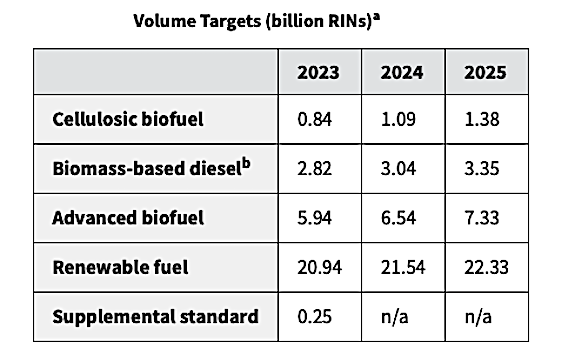
In Washington, the cause of rapid decarbonization received its annual cold shower from the Environmental Protection Agency. EPA announced a final rule to establish low-carbon renewable fuel volume requirements for 2023–2025, and received low marks from the associations representing heavy-duty fuels. Here’s the Tale of the Tape:
What the EPA said

This final rule includes steady growth of biofuels for use in the nation’s fuel supply for 2023, 2024, and 2025. The Energy Independence and Security Act (EISA) of 2007 does not specify statutory volumes after 2022, and EPA in this rule is establishing final biofuel volume targets for all categories under the “set” authority. When determining biofuel volumes for years after 2022, EPA must consider a variety of factors specified in the statute, including costs, air quality, climate change, implementation of the program to date, energy security, infrastructure issues, commodity prices, water quality, and supply.

Response from the Stakeholders

In Washington, Sen. Chuck Grassley (R-Iowa), one of the Senate’s only corn farmers, today condemned the EPA final rule for setting minimum biofuels blending levels for the next three years below current production capabilities, in what he termed a Biden Biofuels Bait-and-Switch”.

“For an administration obsessed with reducing carbon emissions, this rule makes absolutely no sense. The EPA’s proposed rule signaled an increase in biofuels products for the next three years, and the industry is more than capable of meeting those production levels. Today’s RFS rule waters down the earlier proposal. It’s an insulting bait-and-switch for the American biofuels industry, and totally inconsistent with this administration’s climate agenda.

“American biofuels producers are leading the way in cleaner, cheaper, homegrown fuel. Rather than partnering with the biofuels industry, the Biden administration is turning its back on an opportunity to reduce emissions, consumer costs and reliance on foreign oil,” Grassley said.

The Clean Fuels Alliance America expressed extreme disappointment with the rule. As CFAA noted, “EPA finalized moderate increases in the biomass-based diesel and non-cellulosic advanced volumes each year but did not increase the overall renewable fuel market. EPA failed to change biomass-based diesel volumes for 2023 despite the rapid increase in U.S. production of biodiesel, renewable diesel and sustainable aviation fuel during the first months of the year.”

“EPA is undercutting the certainty that our industry hoped for from a three-year RFS rule,” said Kurt Kovarik, Vice President of Federal Affairs with Clean Fuels. “U.S. clean fuel producers, oilseed processors, fuel distributors and marketers have all made significant investments to grow the industry rapidly over the next several years. The industry responded to signals from the Biden administration and Congress aiming to rapidly decarbonize U.S. fuel markets, particularly aviation, marine, and heavy-duty transport, and make clean fuels available to more consumers. The volumes EPA finalized today are not high enough to support those goals.”

“Clean Fuels appreciates the bipartisan support of Representatives, Senators and Governors who asked EPA to ensure that final volumes supported achievable, aggressive growth of advanced biofuel volumes,” Kovarik added. “It is a shame that EPA failed to fully consider the data provided by other federal agencies and industry experts demonstrating the upward trajectory of our industry.”

“Worst of all, EPA ignores the hundreds of millions of gallons of biodiesel, renewable diesel and sustainable aviation fuel generated in the first half of 2023,” Kovarik continued. “In past years when EPA set RFS volumes after the statutory deadline and after the compliance year is nearly half over, the agency properly accounted for available gallons and RINs.”

The Advanced Biofuels Association called some strikes as well as balls in evaluating the EPA final rule.

“EPA’s 2023, 2024, and 2025 RVOs are a missed opportunity to invest in and expand the adoption of low-carbon advanced biofuels,” said ABFA president Michael McAdams. The ruling disagrees with studies conducted by numerous organizations about America’s surging advanced biofuel production capacity, including the Energy Information Agency, and underestimates the existing and planned capacities of advanced biofuels by hundreds of millions of gallons per year. Advanced Biofuels are required to deliver greater than 50% reductions in GHG emissions and are therefore the most effective channel to effectively reduce carbon emissions within the RFS program.

“To arrest climate change, the Biden Administration should leverage the tools at its disposal that can be deployed economically using our existing national fuel infrastructure. By choosing not to reflect the available and growing supply of advanced biofuels in this three-year rule, the EPA is overlooking a chance to reduce 7 trillion pounds of CO2 from our atmosphere. This rule reneges on the Biden Administration’s proclaimed vision for carbon reduction.

“The Advanced Biofuels Association and our members believe in an all-of-the-above solution to our energy and climate challenges, inclusive of electrification and low-carbon advanced biofuels. However, the EPA’s latest ruling does not fully reflect the volumes of advanced, biomass-based diesel, and cellulosic fuels available and could discourage continued investment in sustainable fuels that deliver up to an 80% reduction in emissions versus traditional fossil fuels.

“Although our request for a 500-million-gallon yearly increase in the biomass-based diesel pool was not met, our industry is appreciative that the rule ramps up to 460-million-gallons in the D4 pool by 2025. This boost serves as a commendable acknowledgement of the progress made by those of us involved in the delivery of renewable diesel, biodiesel, and sustainable aviation fuel (SAF). The ABFA will continue to work with the EPA, Department of Energy (DOE), United States Department of Agriculture (USDA), and other key stakeholder groups to deliver the hundreds-of-millions of gallons of advanced biofuels that will not be mandatory under the RFS.”

The Renewable Fuels Asssociation saw positives, but criticized a lack of ambition.

“The RFS was intended to drive continual growth in all categories of renewable fuels well beyond 2022; instead, today’s final rule flatlines conventional renewable fuels at 15 billion gallons and misses a valuable opportunity to accelerate the energy sector’s transition to low- and zero-carbon fuels,” said RFA President and CEO Geoff Cooper. “By removing half a billion gallons of lower-carbon, lower-cost fuel, today’s rule needlessly forfeits an opportunity to further enhance U.S. energy security and provide more affordable options at the pump for American drivers.”

“Despite the rule’s failure to finalize the strong proposed conventional renewable fuel volumes, the action “includes solid volumes for other renewable fuel categories and brings some stability and predictability to the marketplace for the next two and a half years,” Cooper said. “Despite the disappointing reduction in conventional renewable fuel numbers, we appreciate the fact that President Biden and EPA Administrator Michael Regan have continued to prioritize renewable fuels in our nation’s energy and climate strategy.”

“EPA’s final rule includes a total volume obligation of 20.94 billion gallons for 2023, of which 15 billion gallons will come from conventional renewable fuels like corn ethanol. The rule also includes a supplemental volume requirement for 250 million gallons in 2023 to make up for illegally waived volumes in 2016. EPA finalized total volumes of 21.54 billion and 22.33 billion gallons in 2024 and 2025, respectively, with conventional renewable fuel requirements of 15 billion gallons for each of those two years.”

Yep, no RINs just yet for renewable electricity this time around

EPA revealed that it would not implement RINs for electricity (eRINs) as part of today’s final rule. As the organization noted in oral testimony and written comments to EPA, the agency’s initial proposal for incorporating eRINs into the RFS was overly complex and inconsistent with RIN generation provisions for all other renewable fuels.

Hey, what about all that extra production in 2023?

As CFAA noted, EPA’s Public Data for the Renewable Fuel Standard shows that qualifying biomass-based diesel production increased by more than 30% — or 400 million gallons – in the first five months of 2023, compared to the same period in 2022. The Energy Information Administration’s Short Term Energy Outlook for June 2023 projects increases in U.S. production of biodiesel and renewable diesel of more than 800 million gallons in 2023 and 900 million gallons in 2024. In the final rule released today, EPA increases RFS volumes for these fuels by only 590 million gallons over the three-year period: 60 million gallons in 2023, 220 million gallons in 2024, and 310 million gallons in 2025.

In a response to comments, EPA responded on this point.

“Since 2013, when EPA first set the required volume for BBD based on our analysis of the statutory factors in CAA section 211(o)(2)(B)(ii), we have always established the BBD volume at a level that was lower than the quantity of BBD we projected would be produced and used to meet the other renewable fuel standards. We have taken the same approach in this rulemaking. This approach has provided ongoing incentives for increased production of BBD, while also preserving market opportunity for other advanced biofuels within the RFS program. From 2013 to 2022 BBD use has increased from 1.65 billion gallons to 3.12 billion gallons, and the volume of BBD supplied exceeded the BBD volume requirement each year, with the exception of years where the BBD volume requirements were set retroactively. These data demonstrate that our approach to establishing the BBD volume requirements can and does provide significant incentives for the increased production and use of BBD. We project that the volumes we are finalizing in this rule will continue to incentivize growth in the production and use of BBD (see RIA Table 3.1-3).”

Hey, what about those huge projected renewable diesel volumes, why were there not allowances made for them?

As McAdams noted, “It is disappointing that the Biden Administration’s EPA chose not to recognize the projected growth of the biomass-based diesel pool in this rule, despite the groundbreaking carbon reductions being delivered by renewable diesel plants coming online today. More than 20 renewable diesel facilities have been proposed or are currently under construction. Moreover, the ABFA provided the agency with studies conducted by third-party analysts, which found that there are sufficient feedstocks available, accounting for food, to support a more significant increase in renewable volumes.

The EPA responded via comments on this point.

“EPA considered the projected production capacity of biodiesel and renewable diesel. As discussed in RTC Section 4 and RIA Chapter 6.2.2, actual production of biodiesel and renewable diesel has consistently fallen short of the available production capacity. We project that this observed trend is likely to continue in 2023–2025, and that biodiesel and renewable diesel production will be limited to a volume below the production capacity for these fuels by other factors, such as the availability of qualifying feedstock. In this final rule we have updated our assessment of available feedstocks for biodiesel and renewable diesel production. Our updated projections account for expected increases in soybean oil production in the U.S. and increased canola oil production in Canada due to recent investments in oilseed crushing capacity. See RTC Section 4 and RIA Chapter 6.2 for more information on our assessment of biodiesel and renewable diesel production and use in 2023– 2025.”

The Bottom Line

For ethanol, it was a benign RFS finalization. There are 15 billion RINs available for renewable fuel above and beyond those targeted for cellulosic and other advanced biofuels — those will likely be met via corn ethanol, and  ethanol advocates have been more focused on E15 approval to ensure there is a place to put those gallons, than the gallonage, of late.

For heavy-duty, a disappointing level of ramp up that will disincentivize capacity building. It creates a cycle of disappointment. Companies propose a surge in production capacity. EPA under-expands the mandate, citing that actual capacity generally lags planned capacity. So, absent an aggressive mandate, projects are cancelled or postponed, actual capacity lags planned capacity, and future regulators will point to this shortfall as a reason to go slow on advancing renewable fuels. Yet, what actually caused the shortfall in the first place?

Having noted all of that, we see 2023-2025 as the pre-season. The big capacity expansion is in the second half of the decade. Industry has two years to prove that all the factors are aligned for 2026-2030 and justify a massive expansion of mandates that will decisively shift the US towards net zero.

These are: Costs, air quality, climate change, implementation of the program to date, energy security, infrastructure issues, commodity prices, water quality, and supply. Let us point to three of these for which the case has yet to be perfectly expressed: Costs, infrastructure issues, commodity prices, and (feedstock) supply. There’s time to address all of these, and it’s time to address them, all of them. Pointing to planned capacity is not enough, as we have now seen. EPA may have delivered another cold shower on mid-summers day, but we may yet, if efforts are made, be washed clean.

The complete rule

Yep, it’s here.

The complete comments

Read ’em here. 

More stakeholder reaction

American Coalition for Ethanol
“If EPA’s goal with the Renewable Fuel Standard, said American Coalition for Ethanol CEO Brian Jennings, “is to maximize reductions in greenhouse gas (GHG) emissions from the transportation sector, today’s final rule falls short by arbitrarily limiting conventional biofuel use to 15 billion gallons in 2024 and 2025 compared to the Agency’s proposal of 15.25 billion gallons for each of those years. Higher blending targets would enable fuels such as E15 and E85 to quickly displace carbon pollution from gasoline, but EPA’s proposal will rein in those opportunities. We are supportive of finalizing the 250-million-gallon remedy as a supplemental requirement for 2023 and agree with removing the controversial eRIN proposal from the final rule.
ACE’s experience with EPA’s oversight of the RFS over time requires us to remain vigilant to ensure mismanagement or unwarranted waivers are not used to undermine the physical blending of ethanol that has required litigation to rectify in previous years. We will also continue to press the Agency to once and for all update its antiquated greenhouse gas (GHG) model assumptions about corn ethanol. We continue to urge EPA to follow the science and adopt the latest GREET model for its lifecycle modeling, consistent with what Congress required of Treasury in the Inflation Reduction Act 45Z clean fuel production tax credit.”

NATSO, representing America’s travel plazas and truck stops, and SIGMA: America’s Leading Fuel Marketers

“This rule takes seriously the old adage, ‘First, do no harm,” said David Fialkov, Executive Vice President of Government Affairs for NATSO and SIGMA. “Low-carbon fuel and biofuel investments that have already been made will likely continue to be at least modestly profitable. Lower-carbon gasoline and diesel products should continue to be available at a modest price discount compared with petroleum alternatives. These are good things. The agency raised advanced biofuel blending mandates and is reconsidering the eRIN program for EV charging in response to industry comments, including ours. For that we are grateful.At the same time, it’s hard not to be confused and disappointed with the amount of emission reductions that are being left on the table. Instead of pumping the gas pedal, the EPA is keeping the RFS in neutral.

“The final blending targets will result in fewer transportation energy emission reductions than the market is demonstrably capable of delivering. Petroleum refineries that had been considering converting to renewable fuel facilities will now be less likely to do so. Fuel retailers that are considering investing in low-carbon biofuel blending infrastructure may be rewarded—but they may not.

“It is particularly perplexing that EPA is not doing all it can to maximize investment in lower-carbon renewable diesel and biodiesel for heavy-duty trucks. These fuels are commercially available today, and every truck that runs on them emits at least 50 percent fewer greenhouse gas emissions than trucks running on diesel. The final rule is a missed opportunity to meaningfully increase commercial penetration of these lower-carbon diesel alternatives.

“Viewed in conjunction with the Agency’s recent proposed tailpipe emission standards, it is now clear that the Biden Administration is dangerously overestimating the speed at which the country will be able to transition to zero emission vehicles, and at the same time underestimating the country’s desire toconsume lower-carbon liquid fuels in the meantime. Anyone serious about reducing transportation emissions should find this disconnect extremely troubling.

“It’s long past time for the Biden Administration to start viewing the RFS as a tool in its broader climate tool chest, rather than a political nuisance.”

American Fuel & Petrochemical Manufacturers CEO Chet Thompson

“Refiners are pleased to see that EPA has chosen to abandon its unlawful attempt to turn the RFS—a liquid fuel program designed to promote U.S. energy independence—into yet another nine-figure government subsidy program for electric vehicles. eRINs do not belong in the RFS and shouldn’t be resurrected.

“Congress provided EPA flexibility in the years after 2022 to modernize RFS volumes to derive better carbon benefits from the program and help the program work better for all stakeholders. Setting unachievable conventional biofuel targets is a missed opportunity.”

AFPM added: In its December 2022 Set Rule proposal, EPA sought to create a new “eRIN” obligation which would have compelled refineries to directly subsidize electric automakers for producing vehicles capable of charging with electricity from biogas. eRINs, which were reflected in EPA’s cellulosic biofuel proposals for 2024 and 2025, have been removed from the final rule and legislation has since been introduced to make explicitly clear that Congress never intended for electric vehicles to siphon market share away from liquid transportation biofuels as part of the RFS.

Tom Haag, President of the National Corn Growers Association (NCGA)

“Today’s final RFS volumes came in below levels EPA proposed for conventional biofuels for 2024 and 2025, holding ethanol volumes steady at 15 billion gallons. A multi-year RFS volume rule offers stability and certainty for renewable fuels. However, when it comes to addressing pressing energy, environmental and economic challenges, EPA’s final rule falls short of the emission reductions and cost-saving benefits the higher proposed ethanol volumes would have provided.”

Emily Skor, CEO of Growth Energy:

“The RFS remains one of America’s most successful clean energy policies, but, yet again, its full potential as a climate solution remains untapped. EPA’s decision to lower its ambitions for conventional biofuels runs counter to the direction set by Congress and will needlessly slow progress toward this administration’s climate goals. We should be expanding market opportunities for higher blends like E15, not leaving carbon reductions on the table. While the final rule offers a modest improvement in advanced volumes, EPA inexplicably failed to extend that recognition to conventional biofuels. The bioethanol industry has more than adequate supply to meet the higher volumes that were originally proposed in December 2022. Choosing not to put that supply to good use in decarbonizing the transportation sector runs counter to this administration’s previously-stated commitments and undermines the goal of reaching net-zero by 2050.”

Brooke Coleman, Executive Director of the Advanced Biofuels Business Council (ABBC):

“It’s a step back from the proposal and too many advanced biofuel gallons were left on the table, but we’re seeing some progress on cellulosic biofuels. It also takes long-overdue steps toward putting an end to small refinery exemptions. There is no path to a decarbonized economy without taking advantage of America’s world-class biomanufacturing sector. Ultimately, however, achieving real-world growth under this rule will depend heavily on the administration making the right decisions on a range of issues, from Inflation Reduction Act (IRA) tax credit eligibility to market access for higher biofuel blends.”